Sukkot, joy and true happiness
As originally appeared in The Jerusalem Post on October 3, 2025.
“We spend our way to the poorhouse. We buy giant TVs and iPads. Our children wear nice clothes thanks to high-interest credit cards and payday loans. We purchase homes we don’t need, refinance them for more spending money, and declare bankruptcy, often leaving them full of garbage in our wake. Thrift is inimical to our being.”
-J. D. Vance
The high holy days are over. Hopefully a meaningful Yom Kippur was had by all, and we were successful in our own personal re-centering, getting back to our core values. As I have written previously, while not the essential aspect of this time period, both Rosh Hashana and Yom Kippur have financial themes. Whether it’s that our financial year is determined, the centrality of charity as an essential weapon in getting a favorable judgement to the high priest praying for economic success as he leaves the holy of holies, practical money issues take a central role alongside spiritual re-awakening.
As we continue our journey through the holiday season, it’s back to eating! Now, it’s time for Sukkot. Describing the holiday Rabbi Benjamin Blech writes, “Sukkot was the time when, in the agricultural society of old, farmers found themselves the wealthiest they would be all year. It was the time of the harvest. The granaries were full. They were blessed with far more than their immediate needs. It was their moment of affluenza. So the Torah commanded them to leave their homes and to sit in simple frail huts through whose coverings they could look up at the heavens and remind themselves of the source of their blessings. They needed to recall, in a festival appropriately named “the season of our joy,” that true happiness comes not from our possessions but from our priorities, not from what we own but from who we are, not from our mansions that offer physical comforts but from our families with whom we create everlasting bonds of love and affection.”
Rabbi Blech’s description of Sukkot has even more relevance in our current situation. After October 7th and 2 years of war, fallen and wounded soldiers along with hostages still in captivity, I would posit that most of the country has done some type of reset and gotten their priorities in order .
Rabbi Shlomo Aviner writes, “The holiday of Sukkot is also known as a time of rejoicing and happiness. Our forty years in the desert taught us to be happy with our portion in life and to overcome difficulty. We learned how to put into perspective the challenges, the difficulties, and the suffering in our lives, and how to accept our lot without being weakened or broken by it. We are capable of withstanding the test: every year we leave the comfort and security of our homes to live in huts for a week – with no complaint. We realize that God’s Clouds of Glory envelop us and that the Master of the World is always with us, and this knowledge keeps us from becoming disheartened and pessimistic. Our forty difficult years of living in huts in the desert strengthened us. With this historic memory indelibly engraved in our national psyche, no difficulty can deter us. We are confident that only good will come from the challenges we face.”
Don’t get me wrong. I’m not against creating wealth and trying to make money. After all my job is to grow wealth for clients. It’s just that the pursuit of money can’t be the be all and end all of life. I remember when I was a teenager back in Seattle once seeing a bumper sticker which read “whoever dies with the most money wins.” While that may be cute, it misses the point of having wealth. I have written here about the famous story of Wal-Mart founder Sam Walton. On his death bead he said that he “blew it.” Here was a billionaire who created this amazing company, but as he was dying, he realized that he didn’t spend nearly enough time with his family.
Let’s use the second part of this holiday season to focus on using our money for things that we truly need. As I was walking to synagogue one morning this past week pre-sunrise for selichot, I saw a man rummaging through the garbage can looking for food. I stopped off in a fruit and vegetable store in an middle-class Jerusalem neighborhood recently and was told by the shop owner that due to the economic situation he has many people coming in to shop who can’t afford to pay for their food.
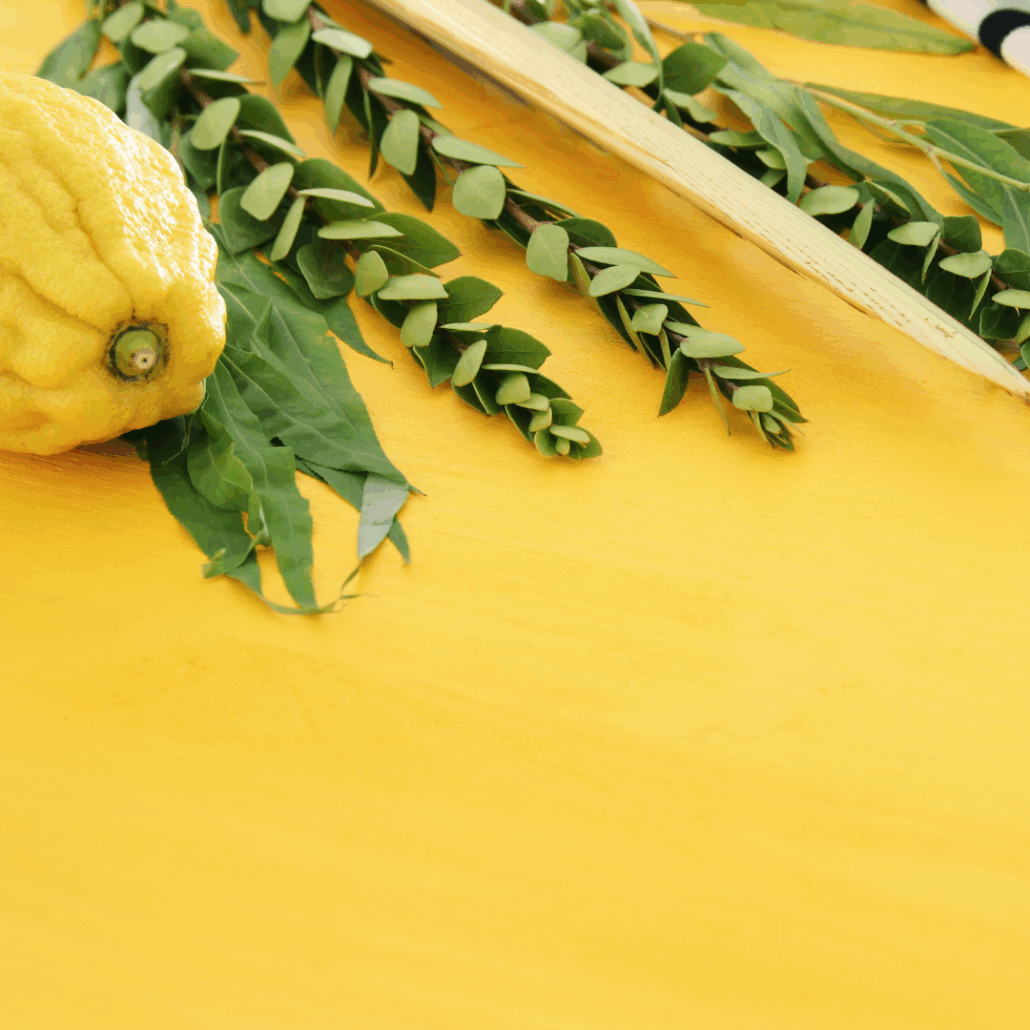
It was just a few days ago that we were all able to pray together. Now we take the 4 species, all different, and bring them together to form one unit. Unity and togetherness are themes of this holiday. Now is the time to continue this and look out for each other as well. There are many hurting financially. Maybe we should forgo some small luxury and help out those in need. Chag sameach and may we remember the lesson of Rabbi Blech, “that true happiness comes not from our possessions but from our priorities.
The information contained in this article reflects the opinion of the author and not necessarily the opinion of Portfolio Resources Group, Inc. or its affiliates.
Aaron Katsman is the author of Retirement GPS: How to Navigate Your Way to A Secure Financial Future with Global Investing (McGraw-Hill), and is a licensed financial professional both in the United States and Israel, and helps people who open investment accounts in the United States. Securities are offered through Portfolio Resources Group, Inc. (www.prginc.net). Member FINRA, SIPC, MSRB, SIFMA, FSI. For more information, call (02) 624-0995 visit www.aaronkatsman.com or email aaron@lighthousecapital.co.il.